Language Support at a Seoul Skin Clinic: Understand the Plan, Not Just the Procedure Name
Prepare for a multilingual consultation in Seoul: request language support, bring original records and confirm the plan in your own words. Know the limits of booking messages and translation apps.
Be specific about the language you need
When arranging a November consultation in Seoul, state both the language you prefer to speak and the language you are most comfortable reading. Booking in one language does not necessarily mean the same support is available throughout the visit. Ask separately about the consultation, fees, consent documents and instructions before leaving.
Ask whether the person assisting is familiar with medical communication, whether support is in person or remote, whether it must be booked, and what hours and charges apply. Confirm the clinic's own arrangements; policies at overseas hospitals do not establish free interpretation in Korea.
Bring questions and original records
Write a short account of the area that concerns you, when it changed and what you hope to discuss. Bring original names, packaging or records for recent procedures, medicines and allergies where available. Mark anything uncertain rather than asking an interpreter to guess a product from a nickname.
Instead of only saying you had a skin booster, record the known product, date and area. If you do not know the dose, say so. Do not omit symptoms to simplify the story, stop prescribed medicines on your own or treat a translated product name as a reason to have a procedure.
Use short statements and speak to the clinician
Raise one point at a time and allow pauses for interpretation and questions. Describe your experience directly to the clinician, not only to your companion. Ask for an unfamiliar term to be explained in everyday words.
Check the side of the body, whether something did or did not happen, dates and quantities. A history of an allergy and no history of an allergy are not interchangeable keywords. If you are unsure you have been understood, pause and clarify before moving on.
Confirm in your own words, not just with a nod
You might say: 'I want to check my understanding. Which procedures have we discussed, and what is still undecided?' Then explain the clinician's care instructions, review plan and reasons to contact the clinic in your own words, asking the clinician or appropriate language-support person to correct any gaps.
This is not a memory test or a word-for-word recitation. Refer to written information if helpful. The aim is a shared understanding of the next step. Ask about the procedure, area, included services, risks, alternatives and the option of no treatment.
Leave with information you can understand
Check your care instructions, medicine labels that need clarification, follow-up arrangements and current contact route. Keep original names, dates and numbers as well as any translation. If written and spoken instructions differ, ask the treating team to resolve the discrepancy.
Routine booking messages are not an emergency service. Seek timely medical help for severe or rapidly worsening symptoms rather than waiting for translation or a customer-service reply. Follow the treating clinician's individual instructions for medicines and aftercare.
FAQ: Can a translation app replace medical interpreting?
An app may help with simple information, but do not assume it gets terminology, negatives, medicine names or doses right. Ask the treating team to confirm important decisions, consent and instructions through appropriate language support. AI translation is not clinical judgment. Before uploading records or identifiable photographs, check the intended use and receiving channel.
FAQ: Is a Korean-speaking friend enough?
A friend can offer support and help organise questions, but conversational Korean is not the same as medical interpreting. Ask about suitable professional help for history-taking, risks and consent; do not make a child responsible for important medical interpretation. Consider whether you are comfortable discussing private matters in front of a companion.
FAQ: Should I sign a document I do not understand?
Ask the team to explain the unclear parts before deciding whether to consent. A booked appointment or a tight travel schedule is not a reason to skip an explanation. If essential questions remain unresolved, ask again or adjust non-urgent plans.
Make time for the conversation
Allow room for consultation and interpretation instead of placing your arrival, treatment and onward travel too close together. Confirm booking and the language needed through the WeChat or LINE options below. Gold J is on the 8th floor of Daechi Building, 408 Teheran-ro, Gangnam, Seoul.
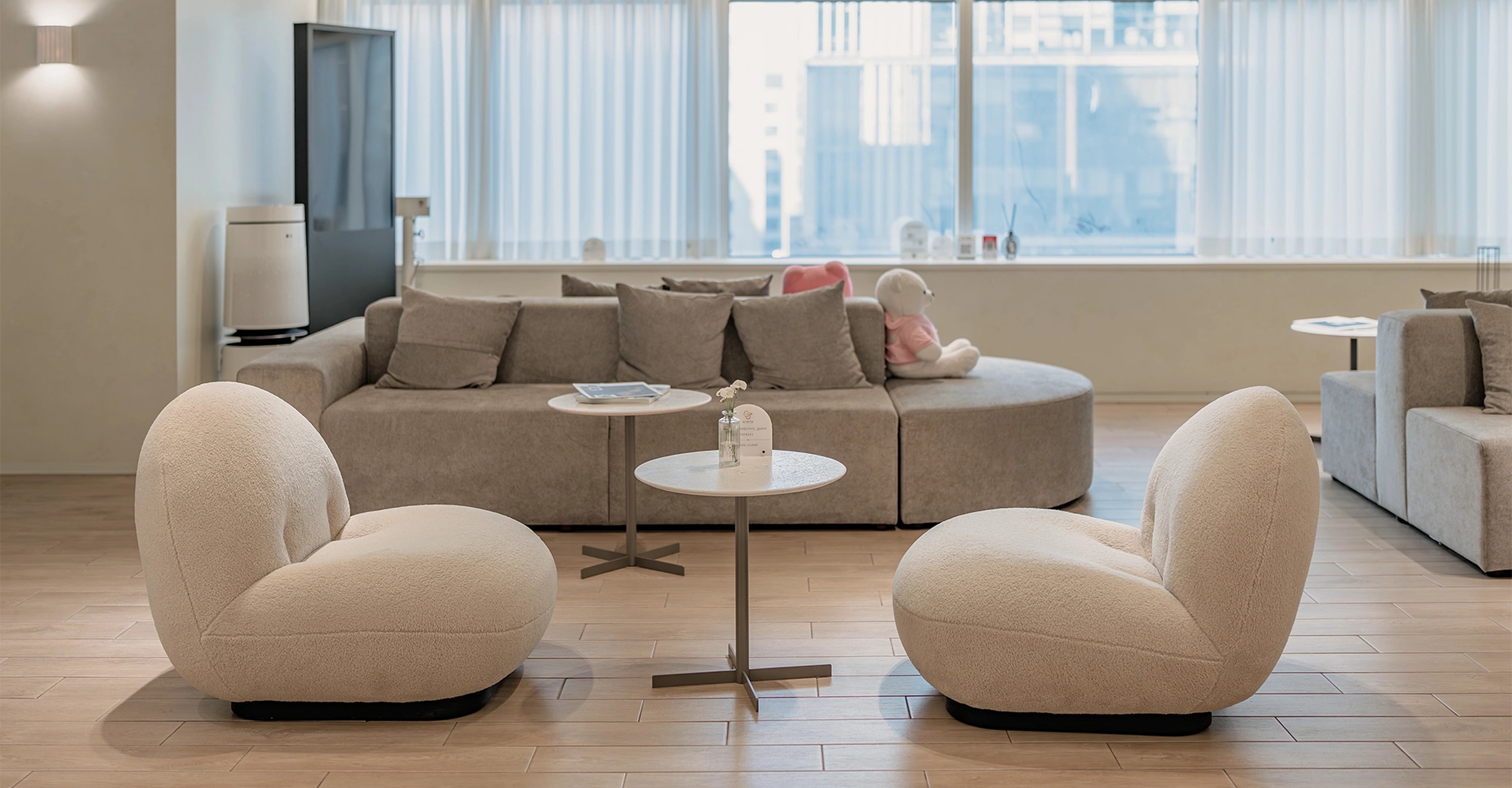
The cover shows the clinic's waiting lounge, not a particular interpreter, service arrangement or treatment outcome. This guide offers general communication tips; confirm language arrangements and individual medical care with the treating team.
Sources
- AHRQ: Use the Teach-Back Method
- AHRQ PSNet: patients and providers speaking different languages
- Hong Kong Hospital Authority: interpretation services
- Gold J Clinic: location and contact information
Visit and contact Gold J Clinic
408 Teheran-ro, Daechi Building, 8th floor, Gangnam-gu, Seoul. Seolleung Station, Exit 1.
Weekdays 10:00–19:30; Saturday 10:30–16:00; lunch 13:00–14:00. Confirm holiday hours before visiting.
LINE · WeChat